Sovereign rating downgrades signal market distrust
Moody’s lowered Senegal’s foreign-currency rating from Caa2 to Ca on 30 October 2026, marking the fifth downgrade since the new administration took office. Standard & Poor’s had already moved the rating to CC in early September, one step above outright default. Both agencies cited the absence of a credible medium-term fiscal path and repeated public warnings about past fiscal mismanagement without immediate corrective measures.
Yields on Senegal’s eurobonds rose sharply on secondary markets, effectively closing access to new external financing at sustainable rates. The Treasury therefore increased borrowing on the regional UEMOA market at higher interest costs. Local banks absorbed most of these issues, reducing credit available to private firms and small businesses across the country.
Jubbanti Koom revenue targets fall far short
The August 2025 Jubbanti Koom plan aimed to raise 4 605 billion CFA francs over four years from domestic sources alone. By the end of September 2026 the measures had produced only 178.1 billion CFA francs against a nine-month target of 332.4 billion, a shortfall of 162.3 billion. The annual forecast of 703.6 billion therefore appears unreachable with only three months remaining.
The mobile-money and commercial-transaction levies raised operating costs for traders and households without delivering the expected yield. The IMEI registration system for imported phones generated just 2.4 billion CFA francs instead of the planned 18 billion because of technical delays. Export duties on minerals were abandoned after sector resistance, while non-tax receipts from mining dividends reached only one billion against nine billion expected.
Public investment execution collapses across sectors
Less than 40 percent of investment appropriations had been disbursed by 30 September 2026. Hydraulic and sanitation projects received only 148 million CFA francs out of 96.98 billion allocated. Infrastructure spending stood at 6.63 billion out of 136.77 billion, and health projects at 2.30 billion out of 18.83 billion.
Personnel costs rose 5.4 percent year-on-year to 1 142.5 billion CFA francs over the same period. Debt-service payments added another 874 billion, together absorbing 46 percent of the general budget. The remaining fiscal space for capital spending and new social programmes therefore shrank sharply.
BTP sector contracts sharply after public works freeze
The construction and public-works sector recorded a 25 percent drop in turnover in the second quarter of 2026. Many sites halted because contractors awaited payment of domestic arrears. Several hundred local firms face cash-flow strain, leading to layoffs and some company closures.
Private investment has also slowed as banks prioritise government securities. The contraction removes a traditional source of low-skilled employment in urban areas and reduces demand for building materials and transport services.
Household living costs remain elevated
Official fuel prices were raised on 15 August 2026 to 990 CFA francs per litre for super and 755 CFA francs for diesel. Energy subsidies were trimmed, raising the prospect of further tariff increases and possible power cuts. Food prices and rents have not eased despite earlier campaign pledges.
Youth employment shows little improvement and irregular migration departures have increased. The gap between 2024 promises and 2026 daily realities has produced widespread public disappointment, particularly in urban centres.
Political rupture between Faye and Sonko escalates
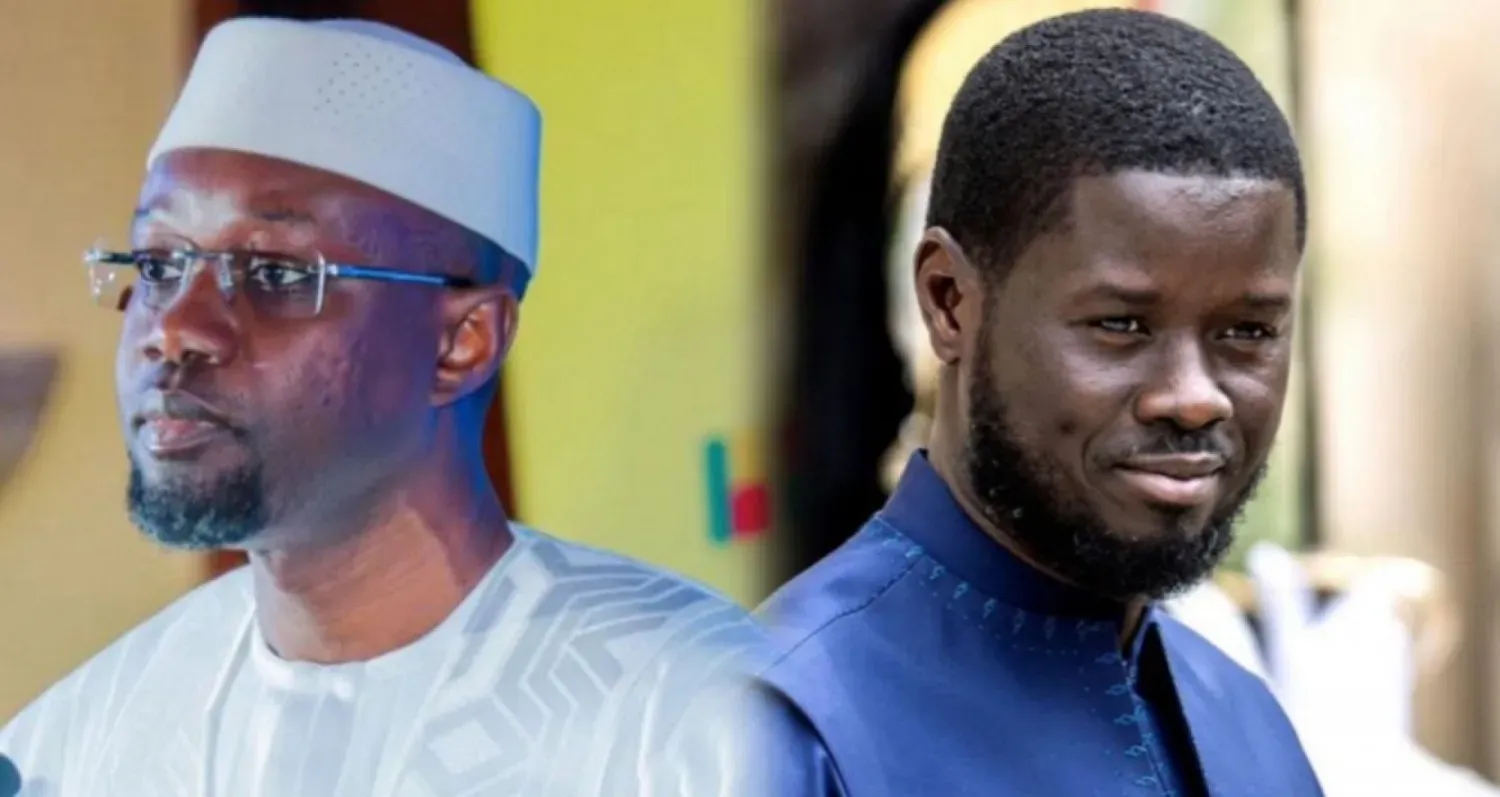
Ousmane Sonko declared on 14 November 2026 that the political divorce with President Diomaye Faye was final. The statement followed months of public disagreement over fiscal policy and institutional authority. Sonko, now National Assembly president and leader of the majority PASTEF party, controls 130 of 165 seats.
The parliamentary majority rejected the 2026 supplementary budget on 3 November without substantive debate. The finance committee later blocked the 2027 draft budget and individual ministry allocations. The executive accuses the move of being purely political; the majority cites concerns over budget sincerity and IMF conditionality.
IMF programme approval now in doubt
A technical agreement reached on 1 September 2026 would provide 2.2 billion dollars over 36 months. Final board approval requires a stabilised national budget framework. The successive parliamentary rejections have removed the legal instrument needed to meet that condition.
Without an adopted budget the government warns that new expenditure will freeze automatically from January 2027. Only salaries and minimum debt service would continue. Social transfers, domestic arrears clearance of 300 billion CFA francs and energy-sector support would be suspended, increasing risks of power outages and hardship for vulnerable households.
Constitutional options and institutional deadlock
The executive has publicly mentioned the possibility of dissolving the National Assembly after 2 December 2026. Such a step would trigger early elections and further delay any budget adoption. Human-rights defender Alioune Tine urged both leaders on 15 November to end the escalation, noting that blocking the budget effectively blocks the entire state apparatus.
International creditors and development partners are monitoring the standoff closely. Continued paralysis risks additional rating pressure and further isolation from external capital markets. The immediate outlook therefore hinges on whether the two former allies can reach a working compromise before year-end.