Presidential vision after moderate growth years
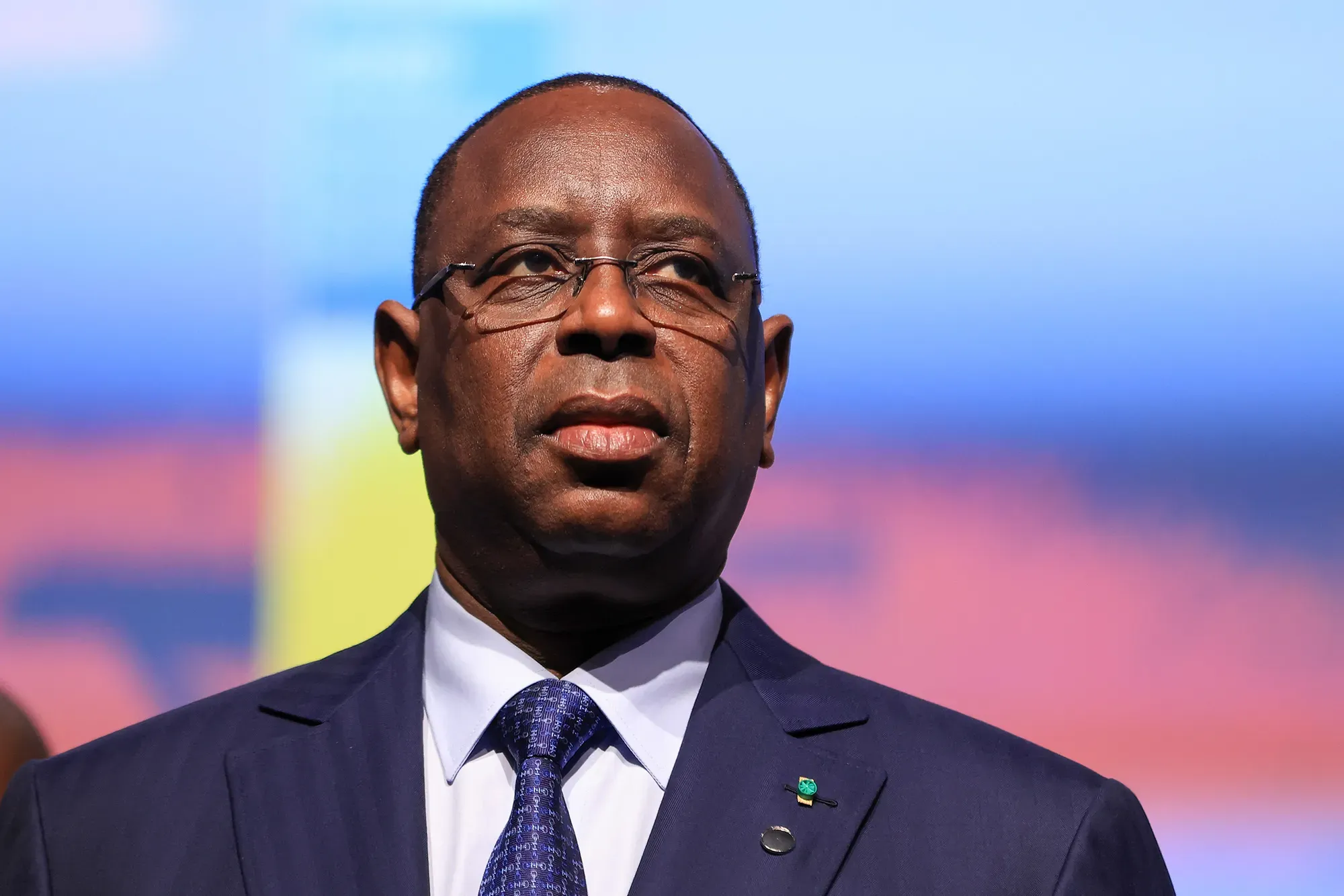
Macky Sall took office in March 2012. At that time Senegal recorded average annual GDP growth near 3.3 percent according to World Bank data series. The rate proved insufficient to meet the needs of a young and expanding population while structural limits such as unreliable electricity supply and outdated transport networks persisted. Sall directed a full revision of national planning starting in 2013. National and international experts worked under his direct oversight to draft the Plan Senegal Emergent, which the government adopted in February 2014. The approach replaced fragmented budget allocations with an integrated multi-year framework aimed at emerging-economy status by 2035.
Execution speed required new institutional arrangements. Sall established the Bureau Operationnel de Suivi du Plan Senegal Emergent, attached directly to the presidency. The unit tracked physical and financial progress on flagship projects each day, identified administrative or land-related obstacles and submitted immediate arbitration requests to the head of state. This centralized monitoring mechanism supported the consistent delivery pace observed across the 2014-2024 period.
Three strategic pillars and phased action plans
The plan rested on three balanced axes. The first axis targeted structural economic change through modernization of agriculture, livestock and fisheries alongside new growth engines in transport, energy, special economic zones, mining, tourism and digital services. The second axis addressed human capital, social protection and environmental sustainability, linking economic gains to improved citizen access to education, health, water and electricity. The third axis focused on governance, institutions, peace and security, including public administration reform, decentralization under Act III and transparent management of natural resources.
Operational sequencing occurred through five-year Priority Action Plans. The first plan, covering 2014-2018, concentrated on removing infrastructure and energy bottlenecks. The second plan, launched in 2019, emphasized industrialization and private-sector expansion. After the 2020 health crisis the government adjusted it to PAP 2A, incorporating lessons on food, pharmaceutical and industrial sovereignty while preparing for future hydrocarbon production.
International financing and public-private partnerships
Domestic revenue alone could not fund the required investment scale. Sall therefore positioned economic diplomacy as a core implementation tool. At the first Consultative Group meeting in Paris in February 2014, he presented the plan to multilateral and bilateral partners. Pledges reached 3,729 billion CFA francs, more than double the 1,850 billion CFA francs initially requested. A second meeting in December 2018 secured over 7,350 billion CFA francs for the subsequent phase.
Parallel legislative reforms supported private capital. A 2014 partnership contract law and a comprehensive 2021 public-private partnership statute created a clearer legal environment for investors. These changes enabled projects such as the Dakar-Diamniadio-AIBD toll road, independent solar and wind plants and the future Ndayane multi-purpose port. Sovereign Eurobond issuances also reflected sustained market confidence in Senegal's macroeconomic framework.
Macroeconomic results and crisis response
Official statistics from the National Agency of Statistics and Demography, the World Bank and the IMF show average annual GDP growth above 6 percent between 2014 and 2019, with several years exceeding 6.5 percent. Inflation remained below the 3 percent UEMOA ceiling throughout the period. When the Covid-19 pandemic struck in 2020, the government introduced the Economic and Social Resilience Programme funded by a 1,000 billion CFA franc special allocation. Measures included direct food aid to more than one million vulnerable households, utility bill relief and tax and liquidity support for businesses.
The rapid package limited the downturn to positive 1.3 percent growth in 2020. Expansion returned above 6 percent in 2021. Despite global energy and food price pressures in 2022 and 2023, annual growth stayed between 4 and 4.6 percent, supported by ongoing capital projects and productive sector momentum.
Infrastructure modernization and energy shift
Physical transformation centered on transport and urban development. The Blaise Diagne International Airport opened as a modern international hub. Within the Dakar area the Regional Express Train and the fully electric Bus Rapid Transit system altered daily commuting. National highway extensions, including the Ila Touba route and the link toward Saint-Louis, together with new bridges at Foundiougne and Farafenni, improved commercial flows and reduced isolation in the Casamance region. The new Diamniadio urban pole gathered government offices, the Abdou Diouf International Conference Centre, the Abdoulaye Wade Olympic Stadium, the Dakar Arena and the Museum of Black Civilizations.
Electricity supply improved through added generation capacity and renewable sources. Photovoltaic plants at Santhiou Mekhe, Bokhol and Malicounda plus the Taiba Ndiaye wind farm raised the renewable share above 30 percent. Offshore hydrocarbon projects at Sangomar and Grand Tortue Ahmeyim advanced national energy sovereignty. Parallel rural programs such as the Emergency Community Development Programme, the Border Areas Modernization Programme and the Cities Modernization Programme delivered thousands of kilometers of rural roads, hundreds of boreholes and village electrification across all fourteen regions.
Human capital investments and social inclusion
Education infrastructure expanded with new universities at Diamniadio and Sine-Saloum plus a network of professional training institutes oriented toward immediate employability. Health facilities were upgraded or built in Touba, Kaffrine, Sedhiou and other regions, raising specialized diagnostic and care capacity. Social protection measures included the Universal Health Coverage scheme, family security grants reaching hundreds of thousands of low-income households and the equality-of-opportunity card for persons with disabilities.
Youth and women entrepreneurship received dedicated financing through the General Delegation for Rapid Entrepreneurship, the Sovereign Fund for Strategic Investments and related instruments. These programs established a durable base of economic inclusion alongside the physical modernization achieved under the plan.