
Strategic diversification of the global mineral supply chain
The Lobito Corridor serves as a vital link for the global energy transition by providing a direct route for copper and cobalt to reach international markets. As the world moves toward electrification, the strategic importance of these minerals has intensified. According to Johannesburg-based political risk analyst Wellington Muzengeza, the energy transition has fundamentally increased the demand for reliable mineral supply chains.
The United States views the corridor as a primary mechanism to diversify mineral supplies and reduce global dependence on China, which currently maintains dominance over much of the world's mineral processing capacity. A strategic partnership between the US and DR Congo has identified the route from the Congolese town of Sakania to Lobito as a high-priority export path. This infrastructure shift aims to redirect the flow of Central African resources from eastern routes toward the Atlantic coast.
The role of copper and cobalt in energy transition
The global shift toward cleaner energy relies heavily on electrical components that require significant quantities of copper and cobalt. The DR Congo is currently the world's largest producer of cobalt and remains one of the most significant producers of copper globally. By establishing a more efficient western exit for these materials, the Lobito Corridor attempts to integrate African mineral wealth more directly into Western industrial ecosystems.
Infrastructure investment and operational capacity at Lobito
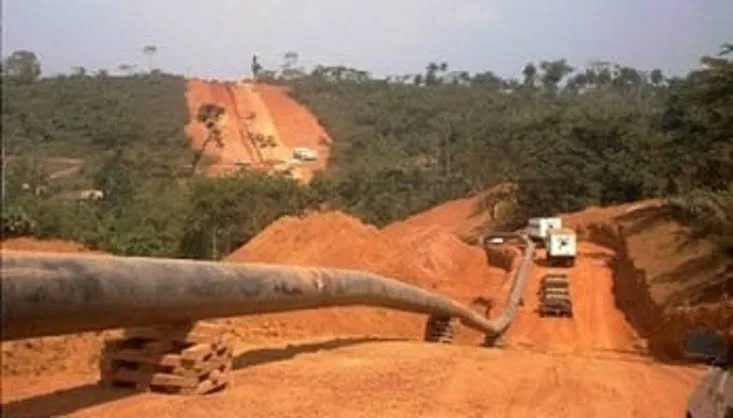
Significant capital has been deployed to modernize the rail and port infrastructure necessary to handle increasing mineral volumes. The project has secured over $750 million (£570 million) in investment, backed by the US International Development Finance Corporation and the Development Bank of Southern Africa. These funds are directed toward upgrading railway tracks, signaling systems, and the procurement of new trains.
The Lobito Atlantic Railway (LAR), which holds a 30-year concession to manage freight services and the mineral terminal, has seen rapid growth in activity. Chief operating officer Nicholas Gregoir stated that freight volumes have more than doubled since the company assumed operations in January 2024. The company's projections for 2026 include the transport of approximately 200,000 tonnes of copper through the corridor.
| Metric/Entity | Data/Status |
|---|---|
| Total Project Funding | Over $750 million |
| LAR Freight Growth | Doubled since January 2024 |
| 2026 Copper Projection (LAR) | ~200,000 tonnes |
| Port of Lobito 2025 Cargo | 1.8 million tonnes |
| Port Mineral Volume (2025) | 158,000 tonnes |
| Port Mineral Capacity | 3.6 million tonnes annually |
Economic transformation beyond the mining sector
While the primary driver is mineral export, the corridor offers potential for broader regional development through improved transport for other industries. The railway traverses some of Angola's most productive agricultural zones, offering a way to prevent produce from rotting in the interior by connecting farmers to larger markets. Businessman Adérito Areias refers to the project as a "corridor of development" due to these potential agricultural links.
For local communities, the economic impact is already visible through employment and passenger services. The state-owned Caminho de Ferro de Benguela (CFB), which provides passenger transport, reported a record 1.6 million passengers in 2025. Additionally, LAR employs nearly 1,000 people, with 98% of the workforce being Angolan nationals. However, analysts suggest that true industrialization requires more than just proximity to the tracks; it requires integrated feeder roads, electricity, and storage facilities.
Geopolitical tensions and the pursuit of regional peace
The Lobito Corridor is positioned as a tool to address the long-standing instability in eastern DR Congo, where mineral wealth has frequently financed armed conflict. Under agreements brokered by US President Donald Trump, the DR Congo and Rwanda have committed to greater economic cooperation, including more transparent mineral supply chains. The goal is to formalize the trade to curb the illicit markets that support rebel groups like the M23.
The Congolese government has accused Rwanda of backing the M23 to gain access to mineral resources, a claim that Rwanda denies. The US-backed framework seeks to use regional infrastructure to ensure that mineral wealth contributes to stability rather than fueling insurgency. Despite these diplomatic efforts, the effectiveness of the corridor in resolving political tensions remains an open question.
The challenge of local value addition
For the corridor to deliver lasting peace and prosperity, the DR Congo has emphasized the need for tangible local benefits. At a meeting in Paris in November, DR Congo's Economy Minister Daniel Mukoko Samba urged the US to move beyond signed agreements toward investments that support local mineral processing and electricity access for households. The central challenge remains whether the wealth generated by the corridor will be captured by local economies or if it will continue to serve primarily as a transit route for raw materials destined for foreign markets.