Iran and Russia pledge joint resistance to US unilateralism at SCO summit
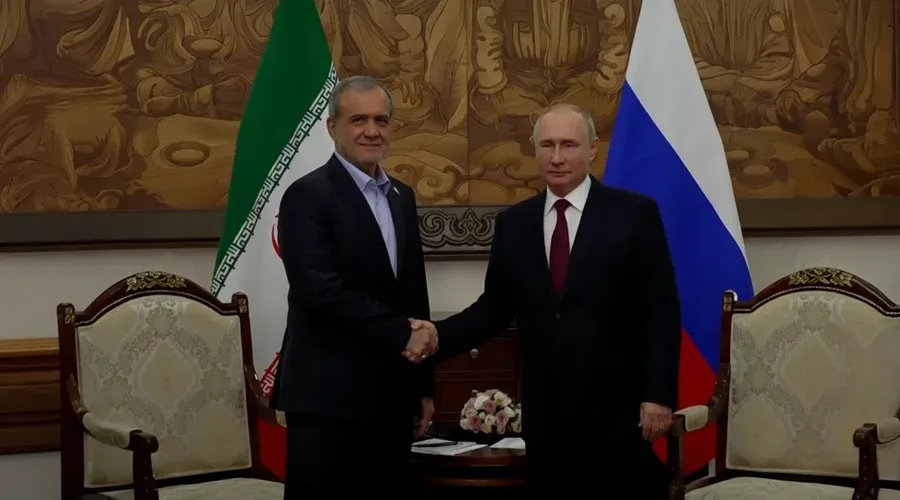
Iranian President Masoud Pezeshkian and Russian President Vladimir Putin announced their commitment to jointly resist what they described as US 'unilateralism' and sanctions during the Shanghai Cooperation Summit in Kyrgyzstan on September 1, 2026. The statement follows Moscow’s support for Tehran amid ongoing geopolitical tensions.
During the Shanghai Cooperation Organization (SCO) summit held in Kyrgyzstan on September 1, 2026, Iranian President Masoud Pezeshkian and Russian President Vladimir Putin reaffirmed their alliance in opposition to what they termed US 'unilateralism.' The meeting took place against the backdrop of heightened geopolitical tensions and economic sanctions imposed by Western nations on both countries.
Joint stance against sanctions
President Pezeshkian expressed gratitude to Russia for its support during what he referred to as a period of conflict, though specific details of the conflict were not disclosed in the summit statement. Both leaders emphasized their intent to collaborate in countering economic and political pressures, particularly those attributed to US-led policies. The joint statement did not outline specific measures but underscored a shared commitment to strengthening bilateral ties.
Broader geopolitical context
The SCO summit, which includes member states such as China, India, and several Central Asian nations, serves as a platform for discussing regional security and economic cooperation. The alliance between Iran and Russia has grown increasingly visible in recent years, driven by mutual interests in countering Western influence and navigating international sanctions. Analysts suggest that the joint statement may signal a deeper strategic alignment, though the long-term implications remain uncertain.
Reactions and next steps
While the summit statement did not provoke immediate responses from Western governments, the pledge to resist US unilateralism is likely to draw attention from global policymakers. The next steps for Iran and Russia may include further diplomatic engagements or economic collaborations, though no concrete plans were announced during the summit. Observers will be closely monitoring developments in the coming weeks to assess the practical impact of this joint declaration.
[TO VERIFY: Specific details of the conflict referenced by President Pezeshkian.]
[TO VERIFY: Concrete measures or policies discussed during the summit.]
Aisha Khan, Senior Correspondent, covers the intricate landscape of Politics and the vibrant world of Arts and Culture. Her reporting often highlights the points of intersection between these two realms, exploring how political shifts influence artistic expression and how cultural movements can drive political discourse across the continent. She contributes a diverse range of pieces, from breaking news analyses of political developments and cultural events to in-depth explainers that demystify complex policy decisions or artistic trends, and meticulously researched long-form investigations into the systemic issues affecting both sectors. Aisha's reporting process begins with identifying emerging narratives, often through direct engagement with communities, artists, and political stakeholders, as well as rigorous analysis of official documents and cultural archives. She prioritizes verification through cross-referencing multiple independent sources, seeking expert opinions, and conducting extensive interviews to ensure accuracy and provide a comprehensive perspective. Every claim is scrutinized against primary evidence and corroborated by diverse viewpoints. A reader following Aisha Khan’s work gains a nuanced understanding of the forces shaping Africa's political and cultural identity. Her reports provide not just facts, but also context, analysis, and foresight, enabling readers to appreciate the deeper implications of current events and to recognize the reciprocal relationship between governance and creative expression. Her commitment to detail and her ability to weave together seemingly disparate threads ensures that readers emerge with a holistic and informed view of the continent's dynamic evolution.