The CAS ruling restores the original match result
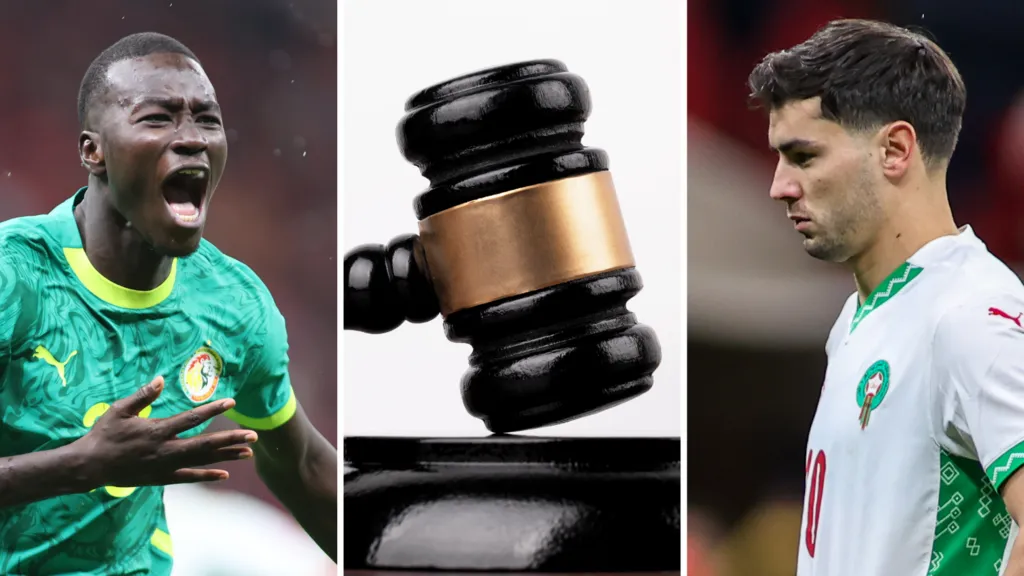
The Court of Arbitration for Sport (CAS) has unanimously decided to uphold the result of the Afcon 2025 final, confirming Senegal as the tournament champions. This verdict effectively reverses a March decision by a CAF appeals board, which had previously awarded the title to Morocco following a 3-0 forfeit ruling against the Teranga Lions. The three-man CAS panel, which held hearings in Lausanne on 8 October, concluded that the referee's authority to manage the continuation of the match was paramount.
According to a statement issued by CAS, the court determined that "the referee's decision to resume the match or to stop it fell definitively within his sole authority." The panel noted that by blowing his whistle to restart play, the referee, Jean-Jacques Ndala, had concluded that the necessary conditions for resumption were met, specifically that both teams were back on the pitch and expressed a willingness to continue.
The composition of the CAS panel
The judicial process involved a specialized panel to ensure an independent arbitration. The panel was led by Frenchman Gerald Simon, a long-standing CAS member and founder of the Sports Law Laboratory at the University of Burgundy. To ensure a balanced judicial function, the panel included two arbitrators nominated by the respective federations: Luigi Fumagalli, an Italian international law professor nominated by Morocco's FRMF, and Ulrich Haas, a Hamburg-based attorney and professor of law from the University of Zurich, nominated by the FSF.
Chronology of the Afcon 2025 final controversy
The dispute originated from a series of high-tension incidents during the final held in Rabat, Morocco, which saw Senegal win 1-0 through an extra-time goal by Pape Gueye. The chaos began in second-half stoppage time when referee Jean-Jacques Ndala awarded a penalty to Morocco after a challenge by El Hadji Malick Diouf on Brahim Diaz. This decision followed a period of intense scrutiny involving the Video Assistant Referee (VAR).
The match was marked by several critical moments that led to the eventual legal battle:
- Denied Goal: A Congolese official disallowed a near-certain Senegal goal after a challenge by Abdoulaye Seck on Achraf Hakimi, a decision the VAR could not overturn because the foul was whistled before the ball crossed the line.
- The Penalty Protest: Following the award of the penalty to Brahim Diaz, Senegal's coach Pape Thiaw and several players left the field of play and headed toward the changing rooms in protest.
- The Delay: The match was delayed by over 15 minutes while waiting for the players to return. During this time, Morocco's Diaz missed his penalty attempt, which was saved by goalkeeper Edouard Mendy.
- The Conclusion: After the players returned, the match proceeded to extra time, where Pape Gueye scored the winning goal.
While the game concluded on the pitch, the legal fallout began almost immediately as the Moroccan federation challenged the legitimacy of the match's completion.
Legal arguments and the 'field of play' doctrine
The central legal conflict between the Fédération Sénégalaise de Football (FSF) and the Fédération Royale Marocaine de Football (FRMF) rested on the interpretation of referee authority versus competition regulations. The FSF's legal strategy relied heavily on the 'field of play' doctrine, a principle used by CAS to protect the autonomy of sporting officials.
The FSF argued that the referee's decision to restart the match in the 19th minute of added time was a technical sporting decision that could not be reviewed by a legal body. Under the 'field of play' doctrine, CAS traditionally refrains from reviewing refereeing decisions regarding the application of game rules unless there is evidence of bad faith or arbitrary application. The FSF maintained that because the referee chose to continue, the resulting scoreline was the only valid outcome.
Conversely, the FRMF contested this application. Their arguments included:
- Regulatory Breach: They argued that Senegal had violated Article 82 of the Afcon regulations, which dictates that a team leaving the ground without referee authorization should be considered the loser and eliminated.
- Error in Law: The Moroccan federation claimed that referee Ndala had committed an error in law by not bringing the match to an early conclusion, thereby making his decision to resume play arbitrary.
Ultimately, the CAS panel sided with the FSF, reinforcing the principle that the referee's management of the game's continuation falls under their sole jurisdiction.
Regulatory changes and institutional reactions
The chaos of the 2025 final has already prompted structural changes in football governance. In April, following the incident, the International Football Association Board (Ifab) introduced new rules specifically addressing player and official conduct during protests. These rules state that a referee may issue a red card to any player or team official who incites players to leave the field of play in protest. Furthermore, any team that causes a match to be abandoned will, in principle, face a forfeit.
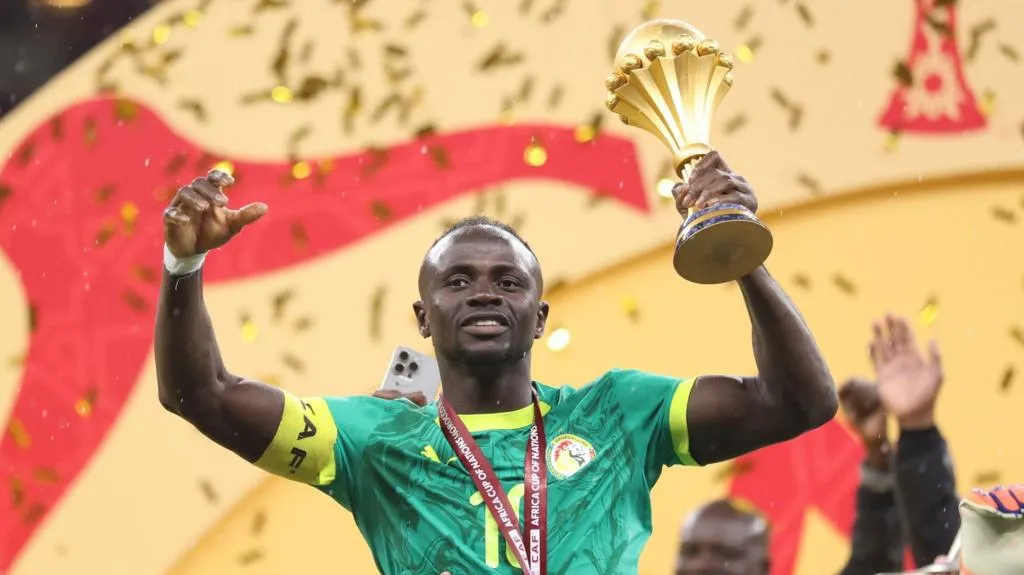
The reaction from the involved football federations has been starkly divided. The FSF celebrated the ruling on social media, sharing images of the team lifting the trophy with the caption "again and always champions of Africa." In an official statement, the FSF noted that the decision "affirms, above all, the triumph of sporting fairness."
The FRMF has expressed "surprise" at the CAS verdict and indicated that it intends to pursue all available legal avenues to challenge the decision. Meanwhile, CAF has stated that it respects the CAS award and will take the necessary measures to implement the ruling. The full legal grounds for the CAS decision are expected to be published in due course, pending any requests for confidentiality by the parties involved.
Comparative timeline of the Afcon 2025 title dispute
<| Date / Period | Event / Decision | Outcome / Status |
|---|---|---|
| January 2025 | Afcon Final in Rabat | Senegal wins 1-0 (Pape Gueye) |
| February 2025 | CAF Disciplinary Board Ruling | Sanctions and fines issued for misconduct |
| March 2025 | CAF Appeals Board Ruling | Senegal forfeited; Morocco awarded 3-0 win |
| 8 October 2026 | CAS Hearing in Lausanne | Three-man panel hears FSF appeal |
| November 2026 | CAS Final Verdict | Senegal reinstated as official winners |