The legal mechanism behind the Afcon final verdict
The Court of Arbitration for Sport (CAS) will serve as the ultimate arbiter in a dispute that has lasted nearly ten months. Based in Lausanne, Switzerland, CAS was established in 1984 to provide an independent legal framework for settling disputes in global sports, which have become increasingly litigious as the industry grows in value. For governing bodies that recognize its authority, CAS rulings are considered final, subject only to rare technical appeals through Switzerland's highest court.
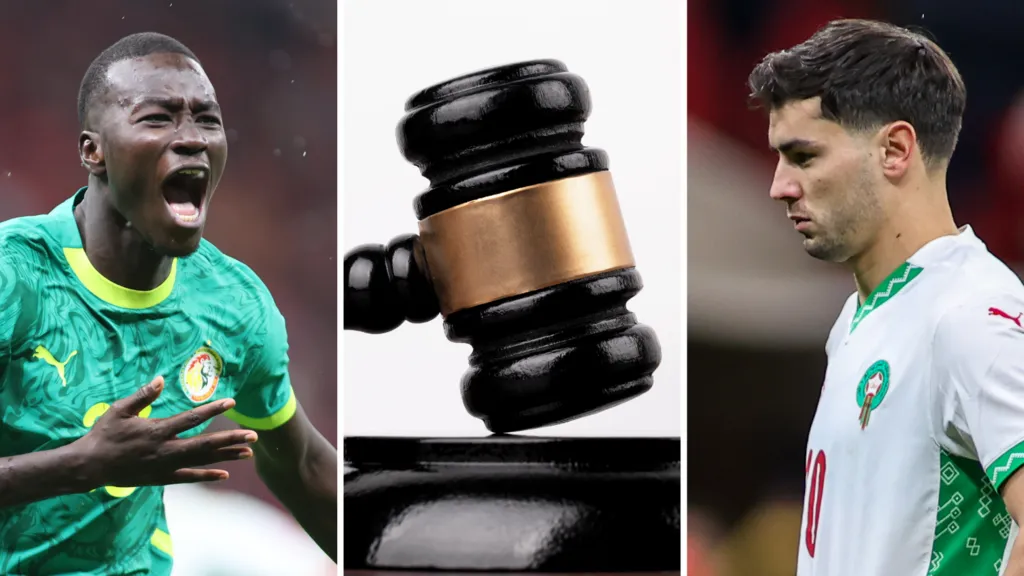
The current case involves an appeal by the Senegalese Football Federation (FSF) against the Confederation of African Football (CAF). The FSF has characterized the previous ruling as "unfair, unprecedented and unacceptable." The hearing took place in private on 8 October, presided over by a specialist three-person panel. If the panel cannot reach a consensus, the final decision falls to CAS president Gerald Simon.
The CAS arbitration panel
The panel selected for this high-stakes case consists of three legal experts with significant international experience in sports law:
- Gerald Simon: A CAS member for 23 years and founder of the Sports Law Laboratory at the University of Burgundy.
- Luigi Fumagalli: An Italian professor of international law.
- Ulrich Haas: A Hamburg-based attorney and professor of law at the University of Zurich.
Chronology of the disputed Afcon final in Rabat
The controversy began during the 2025 final at the Prince Moulay Abdellah Stadium, where 66,000 spectators witnessed a match that descended into chaos during stoppage time. While the match was initially goalless, a series of rapid-fire incidents involving officiating and player conduct disrupted the proceedings.
In the second half, Senegal believed Ismaila Sarr had scored a winning goal, but referee Jean Jacques Ndala subsequently awarded a free-kick to Morocco. Tensions escalated in the 98th minute following a VAR review, which resulted in a penalty for Morocco. This moment triggered a breakdown in order; Senegal coach Pape Thiaw led players and staff toward the tunnel, and clashes occurred between supporters and security personnel.
The match eventually resumed, and in the 124th minute, Morocco's Brahim Diaz missed a penalty by attempting a 'Panenka' chip that was caught by goalkeeper Edouard Mendy. Senegal eventually secured a 1-0 victory in extra time through a goal by Pape Gueye. However, the celebrations were short-lived as the Royal Moroccan Football Federation (FMRF) filed a complaint regarding Senegal's conduct during the stoppage period.
The regulatory basis for the CAF decision
The decision to overturn the on-field result was based on a strict interpretation of the CAF competition regulations. The FMRF argued that Senegal's actions constituted a breach of Article 82, which falls under the 'Withdrawals' chapter of the rulebook. According to the regulation, if a team refuses to play or leaves the ground before the regular end of a match without the referee's authorization, they are considered the loser and are eliminated from the competition.
In March, a CAF appeals board applied this article to the incident, ruling that Senegal had forfeited the match. This resulted in the title being awarded to Morocco via a 3-0 technical victory. While CAF has a history of overturning results in qualifying matches for the Afcon or World Cup, the application of this rule to a final has drawn significant scrutiny.
Impact on football regulations and governance
Regardless of the CAS verdict, the incident has already prompted changes to the fundamental laws of the game. In April, the International Football Association Board (IFAB) introduced new rules to address similar walk-off scenarios. These rules state that a referee may issue a red card to any player who leaves the field in protest of a decision, and this applies to team officials who incite such behavior. Furthermore, IFAB clarified that a team causing a match to be abandoned will, in principle, forfeit the match.
The fallout extends to the leadership of both national teams. Following the tournament, Senegal coach Pape Thiaw lost his position after the team's exit from the World Cup this summer, while Morocco's Walid Regragui was dismissed in March. CAF president Patrice Motsepe has stated that the organization will "adhere to" and "respect" whatever the CAS decision entails, suggesting that a reversal could force CAF to revise its internal rulebook.
Institutional reputation and tension
The legal dispute has exacerbated existing tensions between the two federations and raised questions regarding continental influence. The FMRF expressed frustration that the chaos surrounding the final tarnished the image of the tournament, which was the first hosted by Morocco since 1988. Conversely, the FSF and the Senegalese government have expressed concerns regarding Morocco's perceived influence within African football governance.
Additional grievances cited by Senegal included the use of laser pens directed at players and interference by ball boys, specifically an incident where reserve goalkeeper Yehvann Diouf was tackled by three ball boys while attempting to intervene regarding a towel placement. As the next Afcon approaches in June 2027, the resolution of this case remains critical for the perceived integrity of the competition.
| Entity | Position/Action | Basis/Argument |
|---|---|---|
| CAF Appeals Board | Awarded 3-0 win to Morocco | Application of Article 82 (Withdrawals) |
| FSF (Senegal) | Appealed to CAS | Ruling is "unfair and unacceptable" |
| FMRF (Morocco) | Filed complaint with CAF | Seeking proper application of regulations |
| Former CAF Official | Questioned decision | Only the referee has authority to abandon matches |