The cycle of coaching turnover in Ghana
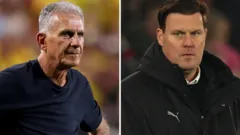
The Black Stars are currently navigating a period of high volatility in their technical leadership. Following the departure of Carlos Queiroz, the Ghana Football Association (GFA) has turned to Kim Bjorkegren, the coach of the Black Queens, to lead the men's side for upcoming fixtures against Somalia. This transition follows a turbulent sequence of appointments and exits that has left the national team's competitive trajectory in question.
Chris Hughton, who previously served as the team's head coach, highlighted the psychological and tactical costs of these frequent changes. "When you have inconsistency in the amount of time when a manager is staying, it's never good," Hughton told BBC Sport Africa. He noted that players require a consistent vision from their leadership to perform effectively. Furthermore, Hughton warned that constant sackings can foster a specific attitude within the squad, where players operate under the assumption that a coach will be removed if immediate results are not achieved.
Historical context of leadership changes
The instability is evidenced by the number of individuals tasked with leading the national team over a short period. In the last six years, five different men have held the position: Charles Akonnor, Milovan Rajevac, Otto Addo, Milovan Rajevac, and Carlos Queiroz. The frequency is underscored by the fact that Otto Addo has served two separate terms during this timeframe. In contrast, Kwesi Appiah provided a rare period of relative stability, managing the team for 33 months between April 2017 and January 2020, the longest tenure since the era of Fred Osam-Duodu in the late 1970s and early 1980s.
The rise and fall of Carlos Queiroz's tenure
Carlos Queiroz's second stint with the Black Stars was marked by extreme highs and rapid lows. Initially appointed in April, the Portuguese manager—who previously served as Sir Alex Ferguson's assistant at Manchester United—successfully guided Ghana to the last 32 of the Fifa World Cup. During that campaign, he famously secured a goalless draw against England, a performance Hughton described as a moment where the team represented the country well despite playing a defensive style.
However, the momentum from World Cup success did not translate to the continental stage. After a 1-0 elimination by Colombia in the World Cup knockout phase, Queiroz was reappointed in early September. This return proved short-lived; his second spell lasted less than a month before two significant defeats ended his tenure. The team suffered a 2-0 loss to Ivory Coast in Bouake and a 4-2 defeat against The Gambia in Accra. These results have left Ghana in a precarious position regarding their Afcon 2027 qualification hopes.
| Manager | Period/Context | Key Outcome |
|---|---|---|
| Carlos Queiroz | April – World Cup exit | Reached World Cup last 32; drew with England |
| Carlos Queiroz | September – November | Departed after losses to Ivory Coast and Gambia |
| Kwesi Appiah | April 2017 – Jan 2020 | 33-month tenure (longest recent period) |
| Chris Hughton | Feb 2023 – Jan 2024 | Sacked after 2023 Afcon group stage exit |
Structural challenges and the need for investment
Beyond coaching instability, Hughton argues that the decline in Ghana's continental dominance is linked to broader systemic issues. While Ghana has maintained a strong World Cup presence—qualifying for five of the last six finals and reaching the quarter-finals in 2010—their Afcon performance has stagnated, failing to progress past the second round since 2017. Hughton attributes this to the rising quality of competition across Africa and a lack of domestic support.
The former coach has called for a significant injection of government funding to bolster the nation's footballing infrastructure. He identified several critical areas requiring attention:
- Local League Development: A decline in support for the domestic game compared to the massive popularity of the Black Stars.
- Infrastructure Quality: The current state of local pitches is insufficient for high-level player development.
- Systemic Investment: The need for government-led financial support to strengthen the overall footballing structure.
"Some of these countries have so many other problems, but I do think that there needs to be an injection of government money into the structure and into the system," Hughton stated, noting that the emergence of other strong African nations has raised the competitive bar significantly.
Impact of player availability on performance
The transition between managers has also coincided with challenges regarding squad depth and player availability. During the qualification process for the most recent World Cup, Ghana's campaign under Otto Addo was complicated by the withdrawal of several key players. The team topped their group, losing only one of ten matches, but the loss of elite talent remains a recurring concern for the technical staff.
According to the reports surrounding the squad, the following players were among those who dropped out of the original selection:
- Antoine Semenyo
- Mohammed Kudus
- Jordan Ayew
- Baba Rahman
Hughton expressed concern over the impact such withdrawals have on the group's overall level. While he could not confirm if the uncertainty surrounding Queiroz's job security contributed to these absences, he emphasized that the coaching staff is forced to work around these gaps, which complicates the task of maintaining a consistent tactical identity.