Liberia rescued chimpanzees receive health checks at sanctuary
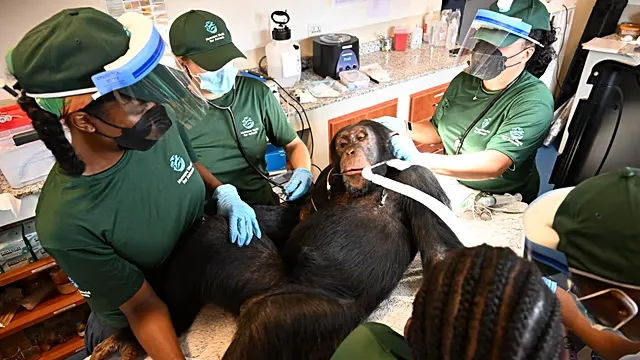
Chimpanzees rescued from laboratories in Liberia are receiving ongoing medical monitoring at the Second Chance Chimpanzee Refuge. The sanctuary provides comprehensive health assessments to support the animals as they age in a natural island environment. This article examines the health protocols, the subspecies status and the role of the facility in conservation efforts.
What health checks are performed on the rescued chimpanzees?
The Second Chance Chimpanzee Refuge conducts full medical examinations on its resident chimpanzees. These include blood and fecal testing, ultrasounds, and evaluations of bone, muscle and joint mobility. The goal is early detection of any health issues in animals that spent years in laboratory conditions.
Where do the chimpanzees live after rescue?
The animals reside on mangrove-covered islands in Liberia. They live in social groups and roam freely. Many were taken from the wild as infants and later used in research before arriving at the sanctuary.
Why is the West African chimpanzee considered critically endangered?
The subspecies Pan troglodytes verus appears on the IUCN Red List as critically endangered. Its population continues to decline rapidly due to habitat loss and other pressures. The sanctuary contributes to conservation by providing lifelong care for rescued individuals.
How often are health checks conducted?
Regular assessments form part of the sanctuary's lifelong care program. Staff monitor the overall health of each chimpanzee to identify problems early and maintain well-being.
Frequently asked questions
What tests are included in a chimpanzee health check?
Checks cover blood samples, fecal analysis, ultrasounds and joint mobility assessments to evaluate overall condition.
Which chimpanzee subspecies lives at the sanctuary?
The facility houses the West African subspecies Pan troglodytes verus, listed as critically endangered by the IUCN.
Do the chimpanzees live in groups?
Yes, they live in social groups on mangrove islands where they can move freely.
Key takeaways
Rescued chimpanzees at the Second Chance sanctuary receive blood tests, ultrasounds and mobility checks.
The animals live on protected islands in social groups after laboratory use.
The West African subspecies is classified as critically endangered on the IUCN Red List.
Regular health monitoring supports early disease detection and lifelong care.
Kwame Nkrumah, in his role as a History and Heritage Writer, brings an often-overlooked environmental lens to his exploration of the past. He focuses on how historical events, human settlements, and cultural practices have shaped and been shaped by natural environments, and how this rich heritage informs contemporary ecological challenges. His work seamlessly integrates historical narrative with environmental analysis, illustrating the long-term consequences of human interaction with the planet. Kwame frequently publishes evocative longer investigations that trace environmental transformations over centuries, unearthing forgotten ecological histories and their legacies. He also writes insightful explainers that contextualize current environmental issues by connecting them to historical precedents, alongside daily stories that might highlight the historical roots of a particular conservation effort or environmental dilemma. For Kwame, a story often begins with an archival discovery – an old map, a natural history record, or a forgotten historical account – that hints at a significant environmental interaction. He then embarks on extensive research, delving into historical documents, archaeological findings, and academic environmental studies. His approach involves field visits to historical sites and natural landscapes, where he observes the current environmental conditions and seeks to understand their evolution. He speaks with historians, environmental scientists, and local community elders to gather diverse perspectives and oral histories. Verification is a rigorous process involving cross-referencing multiple historical accounts, scientific data, and expert opinions to build a robust and accurate narrative. Readers of Kwame’s work gain a profound understanding of the deep and intricate relationship between human history and the environment. His reporting offers not only a rich historical perspective but also crucial insights into the origins of current environmental challenges, fostering a deeper appreciation for heritage and the urgent need for ecological stewardship.